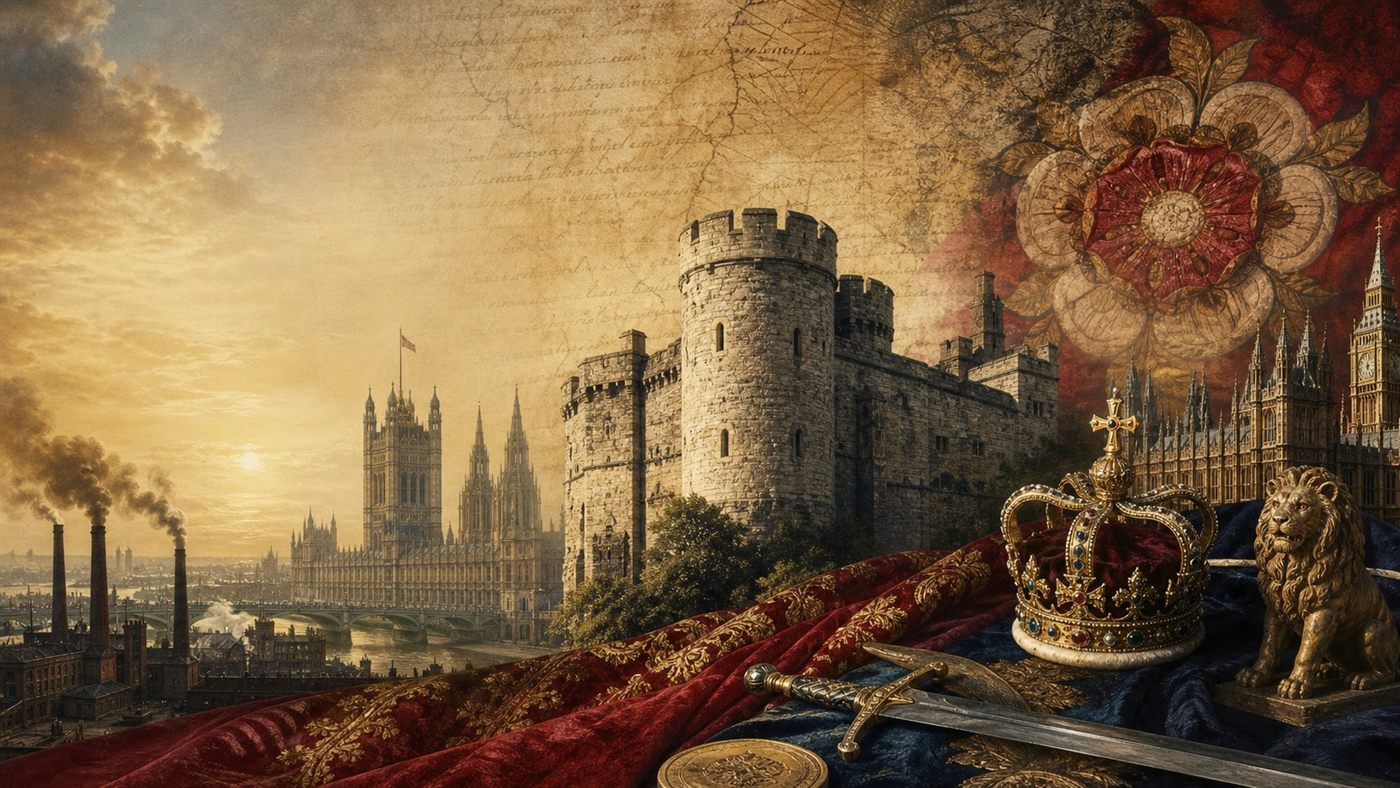
The History of England
British Memory
A clear journey through England's past: Roman occupation, Anglo-Saxon kingdoms, the Normans, Parliament, the Tudors, civil war, and the industrial age.


Overview
A long history, read in order.
England was not formed in a single moment. It grew through cultural and political layers: Roman rule, local kingdoms, Norman conquest, written law, religious reform, conflict between crown and Parliament, and later industrial power.
Eras
The major eras of English history
These periods form the backbone of English history. Some begin before England existed as a state, but they explain the political and cultural foundations that shaped it.
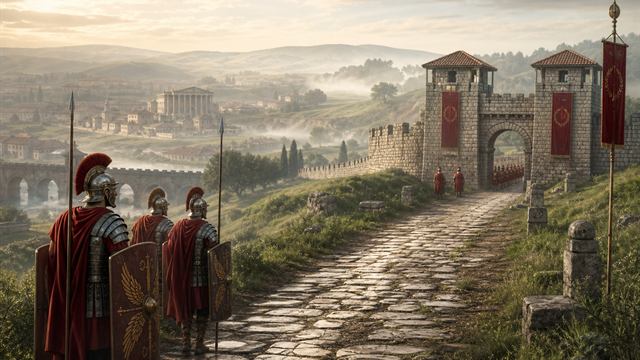
43 - c. 410
Roman Britain
Roman roads, towns, and fortifications transformed life on the island. Londinium grew as a commercial and military centre, leaving a lasting mark on urban life and administration.
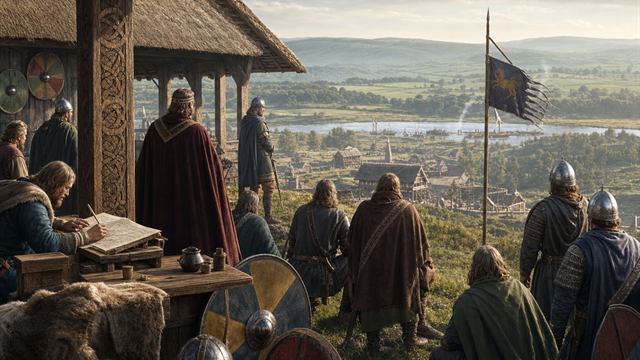
c. 410 - 1066
The Anglo-Saxons
After Roman withdrawal, kingdoms such as Wessex, Mercia, and Northumbria helped shape the foundations of early English language, law, and identity.
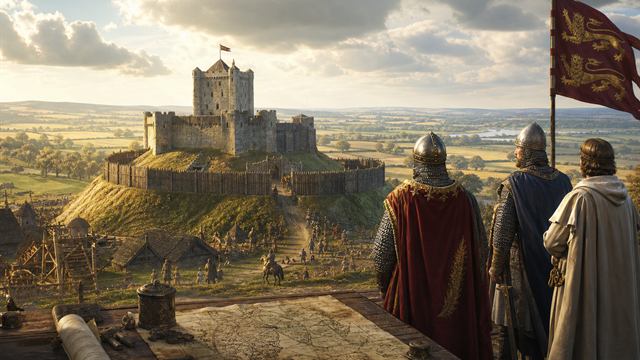
1066 - 1154
Norman England
William's conquest brought a new aristocracy, castles, the Domesday Book, and a strong connection with Franco-Norman culture.
1154 - 1485
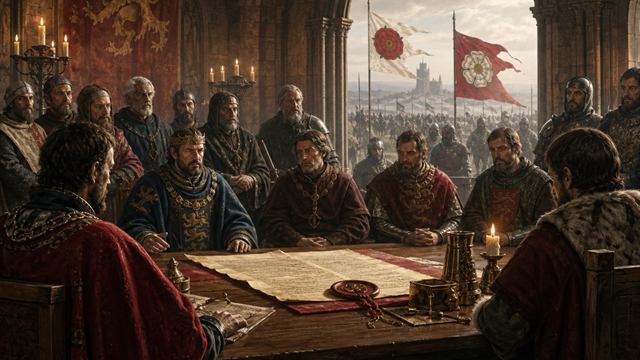
The Plantagenets
From Magna Carta to the Wars of the Roses, this period strengthened law, Parliament, and the dynastic rivalries that shaped the English monarchy.
1485 - 1603
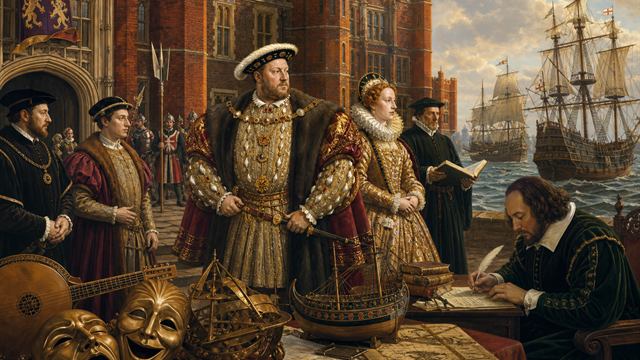
The Tudors
Henry VIII and Elizabeth I marked religious reform, maritime expansion, and a new court culture in which Shakespeare's theatre flourished.
1603 - 1714
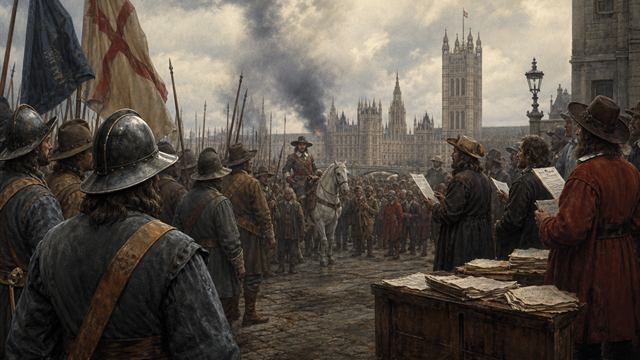
The Stuarts and Civil War
Conflict between king and Parliament led to civil war, the execution of Charles I, the restoration of monarchy, and the Bill of Rights in 1689.
1714 - 1837
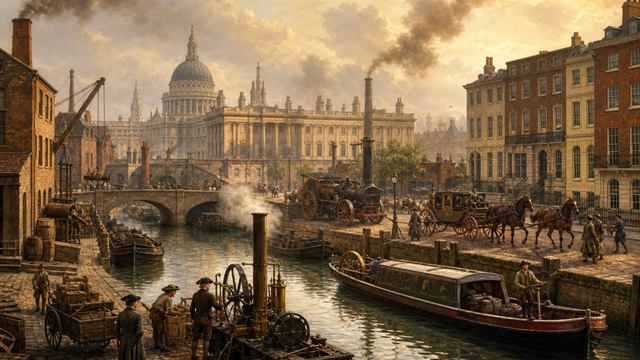
The Georgians and Industry
Cities grew, Parliament became more powerful, and industrial invention changed labour, transport, and social order.
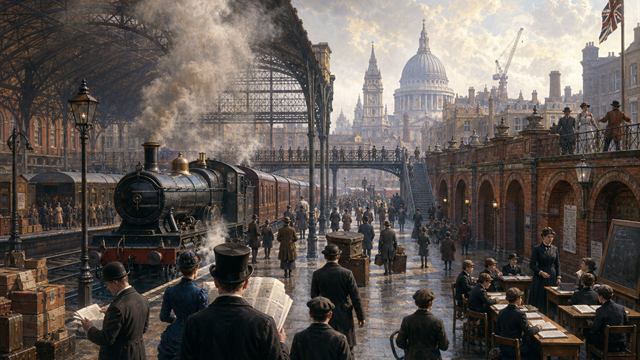
1837 - 20th century
Victorian and Modern England
Political reform, education, railways, and the two world wars placed England inside a wider British and global history.
Timeline
Dates that changed England
-
Roman conquest
Rome turns much of Britain into a province of the empire.
-
Alfred the Great
Wessex strengthens against Viking pressure and helps form an English identity.
-
Battle of Hastings
William of Normandy wins the throne and begins Norman rule in England.
-
Magna Carta
The document establishes the idea that even the king stands under the law.
-
Act of Supremacy
Henry VIII separates the Church of England from papal authority.
-
Bill of Rights
Parliament gains a more secure role in England's constitutional order.
-
Acts of Union
England and Scotland unite politically as the Kingdom of Great Britain.
-
Reform Act
Parliamentary representation expands and a modern phase of reform begins.
Themes
Why English history matters
Monarchy and Parliament
The history of England is often read as a balance between the crown and institutions. From Magna Carta to the Bill of Rights, royal power was gradually limited.
Language and culture
English grew from Anglo-Saxon, Norman, Latin, and Norse layers. Literature, theatre, and print helped spread a shared national culture.
Cities and industry
The Industrial Revolution changed the rhythm of life: factories, railways, and trade created new wealth, but also inequality and social reform.
Blog
Long-form historical articles
The blog is designed for expanded articles: deeper explanations, historical context, source notes, and period-by-period essays published through WordPress.
WordPress blog
Latest articles
Read the newest essays and historical notes published on British Memory.
Category
Medieval England
Articles about Norman rule, Magna Carta, Parliament, and dynastic conflict.
Category
Tudor England
Longer reads on the Reformation, Elizabethan culture, monarchy, and sea power.
Study sources
Where to continue reading
History becomes clearer when it is read through documents, museums, and historic places. These sources are useful starting points for deeper study.
- British Museum for archaeological objects and early periods.
- The National Archives for state documents and primary sources.
- UK Parliament for the history of parliamentary institutions.
- Historic England for heritage, buildings, and historic places.